
Why do some people stay broke even with a good salary?
Why do you sometimes spend money and regret it later?
Why does earning more not always make people feel secure?
The answer is not just income.
It is the psychology of money.
Here are powerful psychological facts about money that might change the way you think forever.
1. Your Childhood Programmed Your Money Mindset
The way your parents talked about money shaped your relationship with money.
If you grew up hearing “money is hard” or “we can’t afford that,” those beliefs may still control your financial decisions today

2. People Spend Emotionally, Not Logically
Most purchases are driven by feelings rather than logic. For example, if you have a bad day at work, you might open an online shopping app and buy something you don’t really need. Although it feels good for five minutes, regret often follows. This is a classic example of emotional spending, not financial planning. Furthermore, stress, boredom, insecurity, or the desire to feel successful often influence these purchases. As a result, emotional spending is extremely common.
3. Your Income Reflects Your Self Belief
If deep down you think you do not deserve more, you will unconsciously avoid opportunities. An example is that , Someone is offered a higher paying job but refuses because they feel “not ready” or “not good enough,” even though they are qualified.
A strong financial success mindset starts with believing you can grow.
4. Losing Money Hurts More Than Gaining It Feels Good
This fear keeps many people from investing or starting businesses. Like lets say there’s a person avoids investing in a small business idea because they are afraid of losing money, even though the potential profit is much bigger.
Wealth building habits require learning how to manage fear, not avoid it.
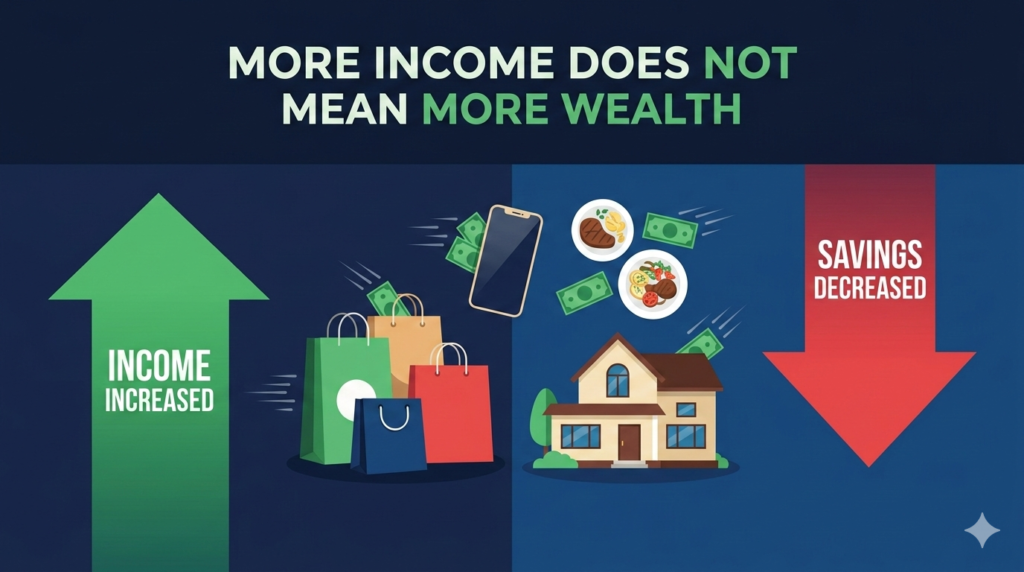
5. More Income Does Not Mean More Wealth
Increasing your income does not automatically make you wealthy. For instance, when someone gets a salary raise, they may immediately upgrade their phone, move to a bigger apartment, or start eating out more often. Consequently, by the end of the month, little or nothing is saved. This pattern is one of the biggest reasons people remain financially stuck.
6. Scarcity Thinking Blocks Growth
If you constantly think there is never enough, you act small, you make decisions from fear. Refusing to invest in learning a new skill because it feels risky, even though that skill could double your income later.
An abundance based money mindset helps you think long term.
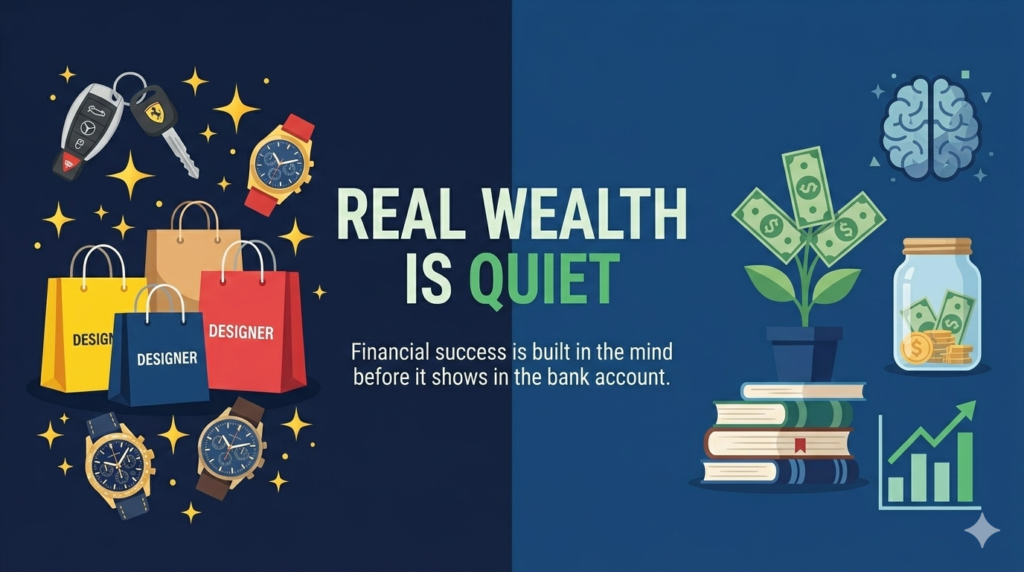
7. Real Wealth Is Quiet
Many people want to look rich instead of becoming rich. The richest habits are boring.
Saving. Investing. Learning. Improving skills. Repeating. Money is not just numbers. It is psychology. Change your money mindset and your financial future starts to change too.
Because
financial success is built in the mind before it shows in the bank account.