
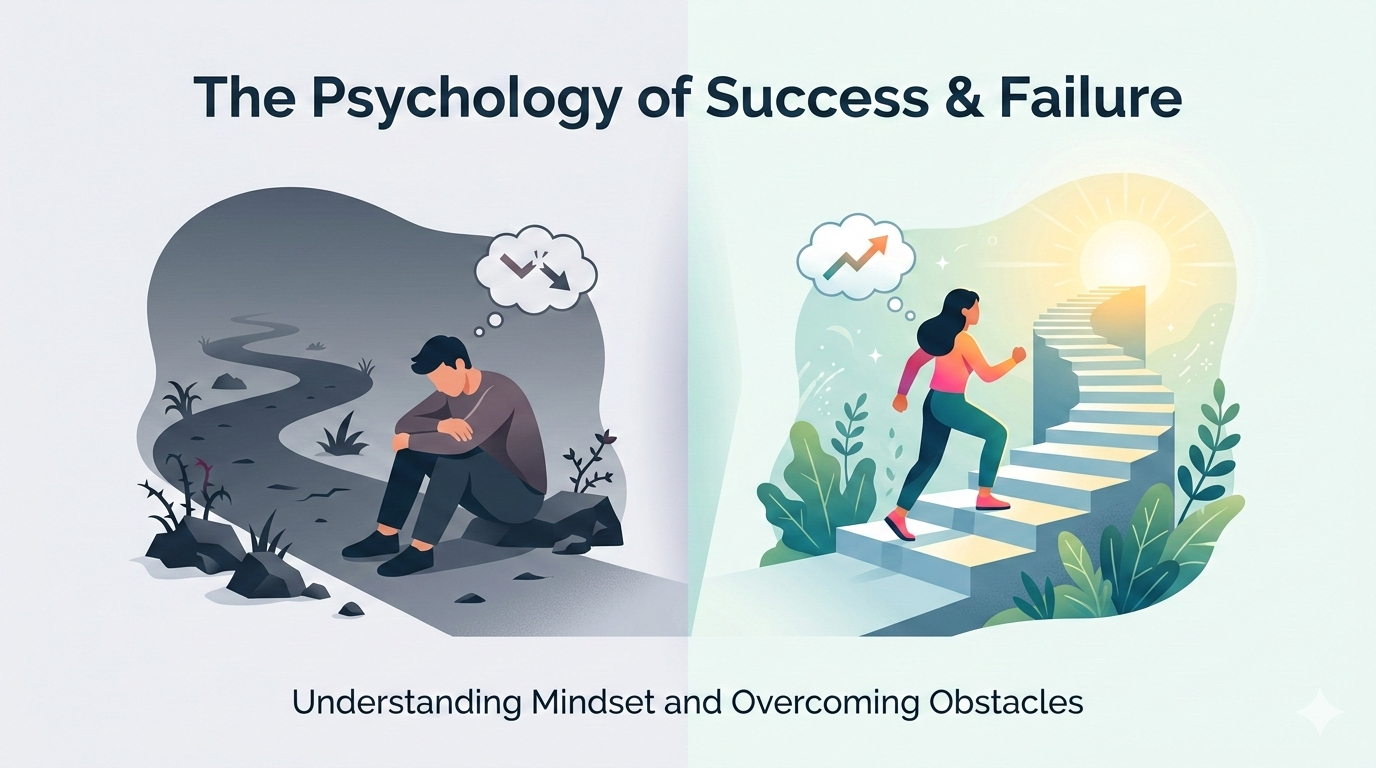
Why do some people succeed even after many failures?
Why do others give up after one mistake?
Why do two people with the same intelligence end up living completely different lives?
The answer is not just talent or luck. In reality, The real difference often comes from the psychology of success and failure.
Your mindset, habits, and reactions to challenges quietly shape your future. Here are seven psychological facts that explain why some people move forward while others stay stuck.
1. Successful People See Failure as Learning
People who succeed do not see failure as the end. Instead, they see it as feedback.
Consider this situation: A student fails an exam. One student thinks “I am not smart enough” and gives up. Meanwhile, another student thinks “I need to study differently next time.” As a result, the second mindset leads to improvement and growth. This is why learning from mistakes is a key principle in the psychology behind success.
2. Fear of Failure Stops People Before They Even Start
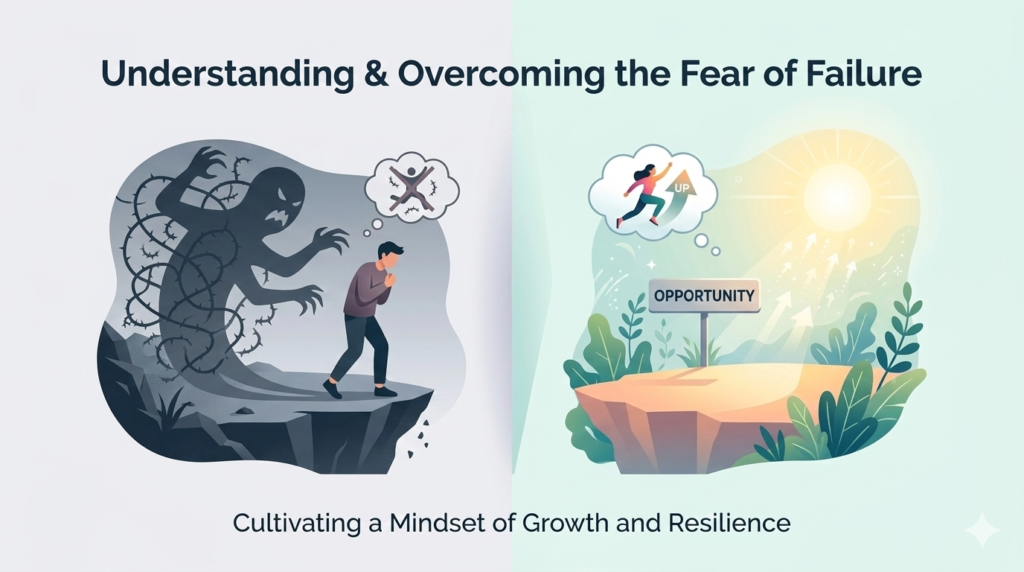
Many people never reach their goals because they are afraid of failing. In fact, this fear often stops progress before it even begins.
For instance, someone wants to start a small online business but keeps waiting for the perfect moment. Eventually, months turn into years and nothing happens. The real problem was not lack of ability. Rather, it was fear holding them back.
3. A Growth Mindset Creates More Success
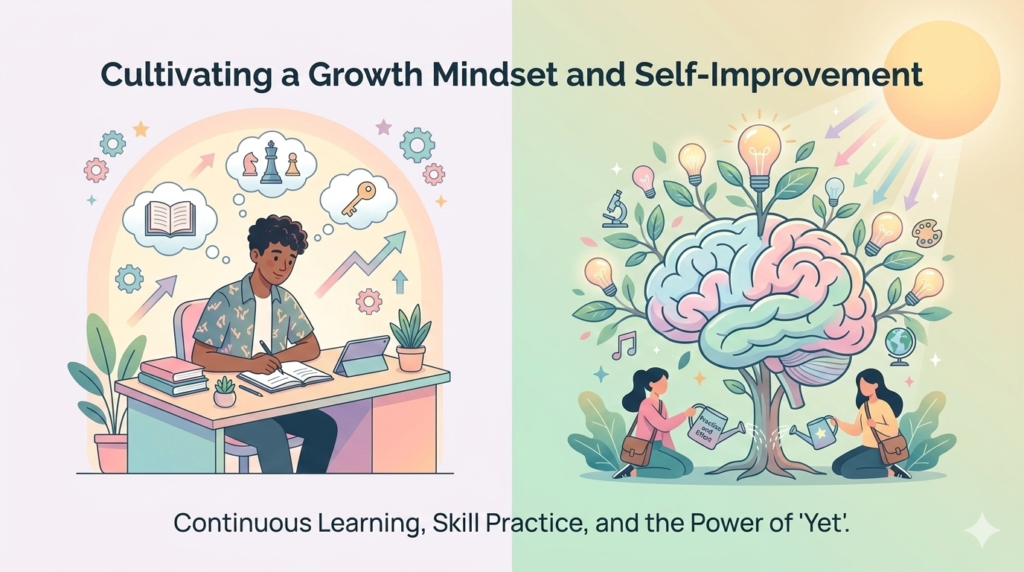
A growth mindset means believing that skills can improve with effort and practice. Because of this belief, people keep learning even when things feel difficult.
Example: Two people struggle with learning coding. One says “I am not made for this.” On the other hand, the second person keeps practicing and learning from mistakes. Over time, the second person improves while the first stays stuck.
4. Small Daily Habits Shape Big Results
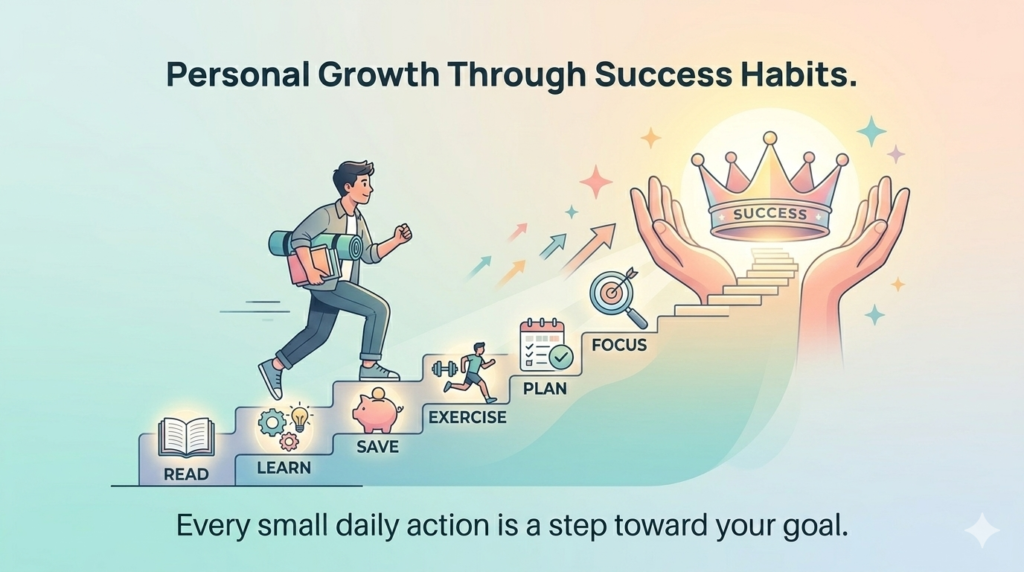
Success usually comes from small actions repeated every day. Although these actions seem small, they slowly build powerful results.
Example: Reading ten pages of a book daily may feel insignificant. However, in one year that person could finish many books and gain valuable knowledge. Therefore, these simple actions create strong success habits over time.
5. People Often Choose Comfort Over Growth
The human brain naturally prefers comfort and safety. Because of this, people often choose easy activities instead of challenging ones.
Example: A person wants to learn a new skill but keeps scrolling social media because it feels relaxing. At first, it seems harmless. However, choosing comfort repeatedly can slowly lead to failure, while choosing effort leads to growth.
6. Your Environment Shapes Your Motivation
The people around you influence how you think and act.
Example: If a student spends time with hardworking and ambitious friends, they often become more focused. If they spend time with people who avoid effort, their motivation can drop.
7. Successful People Take Responsibility
One major difference between successful and unsuccessful people is responsibility.
Example: When something goes wrong, successful people ask “What can I improve next time?” People who blame everything on luck or others often repeat the same mistakes.
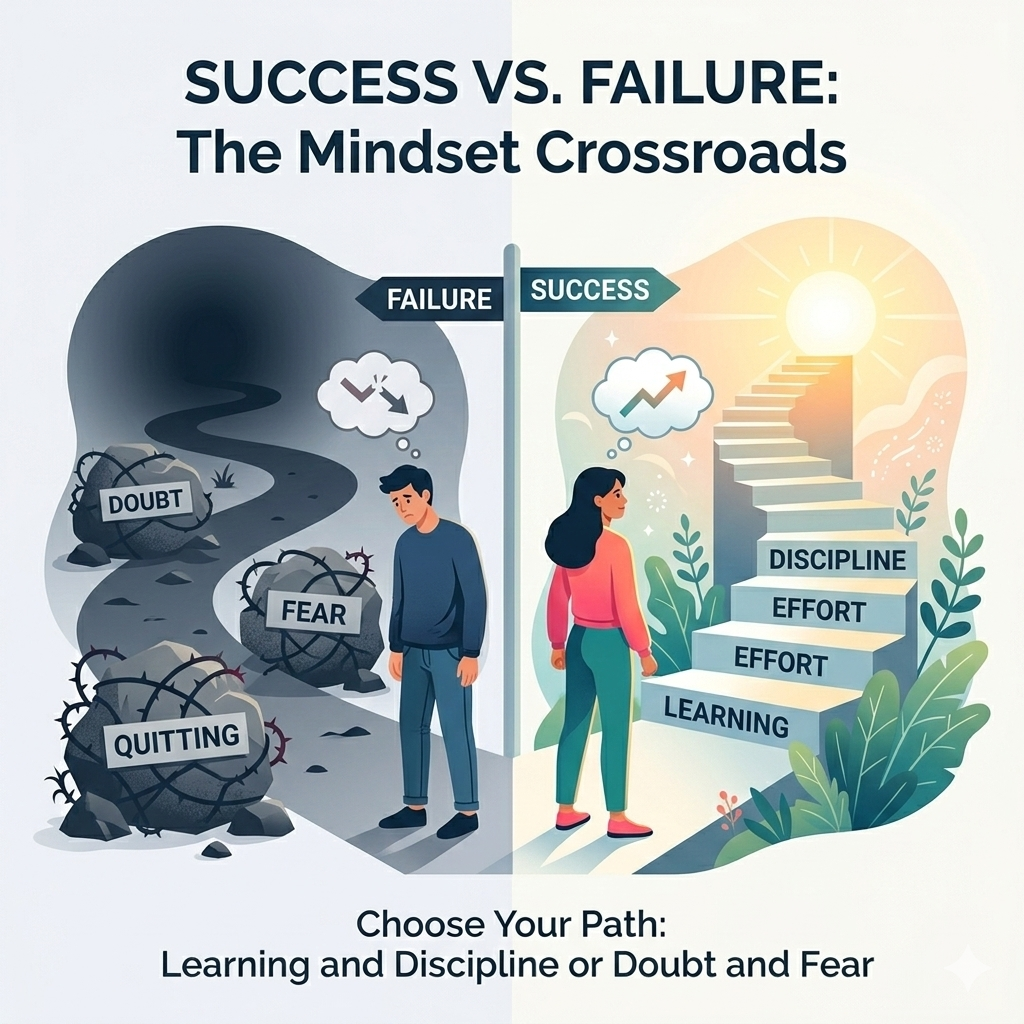
Success and failure are not random events. They are shaped by mindset, habits, and daily choices. Understanding the psychology of success and failure helps you see challenges differently and build a stronger success mindset.
Most successful people are not born extraordinary. They simply learn, adapt, and keep moving forward when others stop.